Food for Life

One number tells you how well a food fits you.

Point your phone at a plate, a package, a barcode or a supplement bottle. Longevity Food Lab returns a 0–100 score tuned to the health goals you set — with the reasoning in plain English, and a smarter swap when there is one. Nobody owns this number yet. We intend to.

iPhone only for now. The TestFlight link installs Apple's free TestFlight app first, then ours — about a minute.
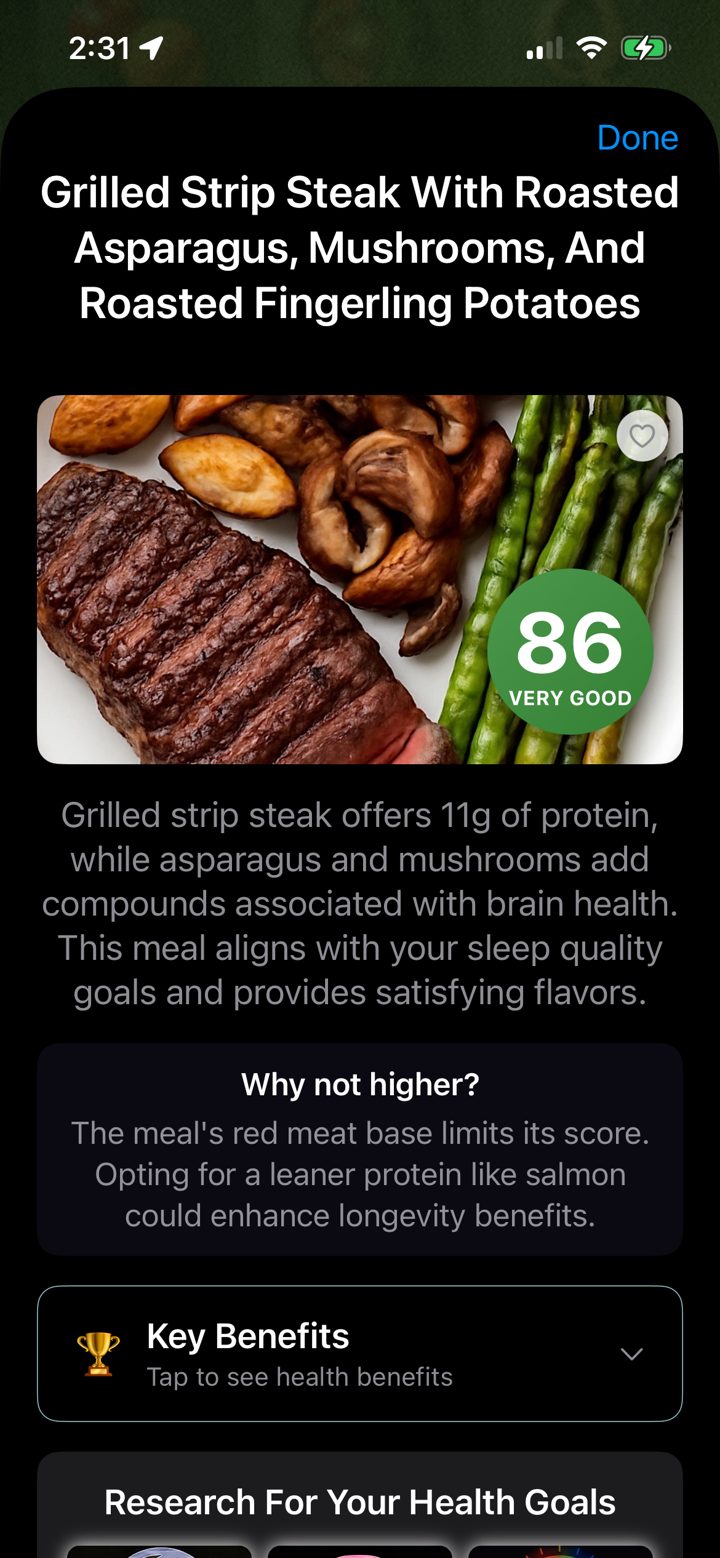
Longevity Food Lab scoring a grilled strip steak dinner: 86, Very Good, with Why not higher? explanation
In TestFlight44 builds to a live tester group; feedback becomes a fix in days.
1,080,000grocery products scored on the phone itself — works with no signal.
223verified, cited longevity-science facts behind the reasoning.
IndependentNo commission, placement fee or affiliate payment on anything we score. Ever.
The moment

Longevity went from a niche to the biggest story in health.

The money, the audience and the behavior have all arrived at once. Wellness is a $6.8 trillion economy and still compounding; the 50-plus generation controls more than half of U.S. consumer spending; and people say, in large majorities, that they want to live healthier for longer and don't know how. Food is the one lever every one of them touches three times a day.

The wellness economy keeps compounding

Global wellness economy, trillions of U.S. dollars. Healthy eating, nutrition and weight loss alone is a $1.15 trillion segment.

$0$4T$8T $5.6T2022 $6.3T2023 $6.8T2024 $9.8T2029 forecast +7.9% in the latest year
Global Wellness Institute, Global Wellness Economy Monitor 2023–2025.

Capital is already betting on consumer longevity

Cumulative funding, selected consumer-facing longevity companies, billions of U.S. dollars. UBS projects an $8 trillion longevity economy by 2030.

Oura$1.5B · $11B valuation Retro Biosciences$1.18B · $1B Series A, 2025 Function Health$350M · lab-panel membership Neko Health$325M · body-scan clinics Oura: 5.5 million rings sold by Sept 2025, on a $1B annual sales pace.
Longevity Investors News, 2026 capital-flow review; company announcements 2025.
123M

Americans 50 and older

$10.7 trillion in consumer spending in 2024 — more than half of all U.S. consumption — and $2.7 trillion of it on health. This is our first audience, and it is the one already paying for supplements, newsletters and subscriptions.

AARP Longevity Economy Outlook, 2026.
87%

want to live healthier for longer

Yet 74% failed a basic 20-question longevity quiz, and 72% rely on their primary-care doctor to manage their health. The demand is there; the tool is missing — and the doctor is the trusted channel.

MDVIP / Ipsos national survey, 1,003 U.S. adults.
60%

call healthy aging a top priority

McKinsey's 9,000-consumer survey puts healthy aging at or near the top of wellness priorities across markets, with use of nutritionists up 12% since 2023. People want to be told what fits them, by someone they trust.

McKinsey, Future of Wellness 2025.

Food-scanning is already a mass habit

The behavior we need — point a phone at food and expect a verdict — is learned. Yuka, which grades packaged products only, shows the scale.

80M+ users worldwide 16.4M downloads in 2025 alone 2M+ scans every day Health & Fitness apps: 1.83 billion downloads Jan–Nov 2025 (+5.1%); MyFitnessPal 23.3M (+22%).
Food Manufacture, Feb 2026 (Yuka figures); AppTweak, Most Downloaded Health & Fitness Apps 2025.

Supplements: a habit without a referee

Three in four U.S. adults take supplements and most call them essential — and no mainstream app scores them alongside food.

75% of U.S. adults take a supplement 91% of users call them essential to their health 57% trust their physician mostfor supplement advice Users who buy through a healthcare professional spend a median $100 a month.
Council for Responsible Nutrition consumer surveys, 2018 and 2024.
The app

Say it, scan it or photograph it. Get the number and the reason.

Every competitor is a scale or a ledger: calories in, calories out, a budget to overspend by three o'clock. Longevity Food Lab grades the food, not the person — one score, one sentence, in about three seconds — then rolls the day into a single number that a small snack cannot ruin.

Tell it what's in front of you

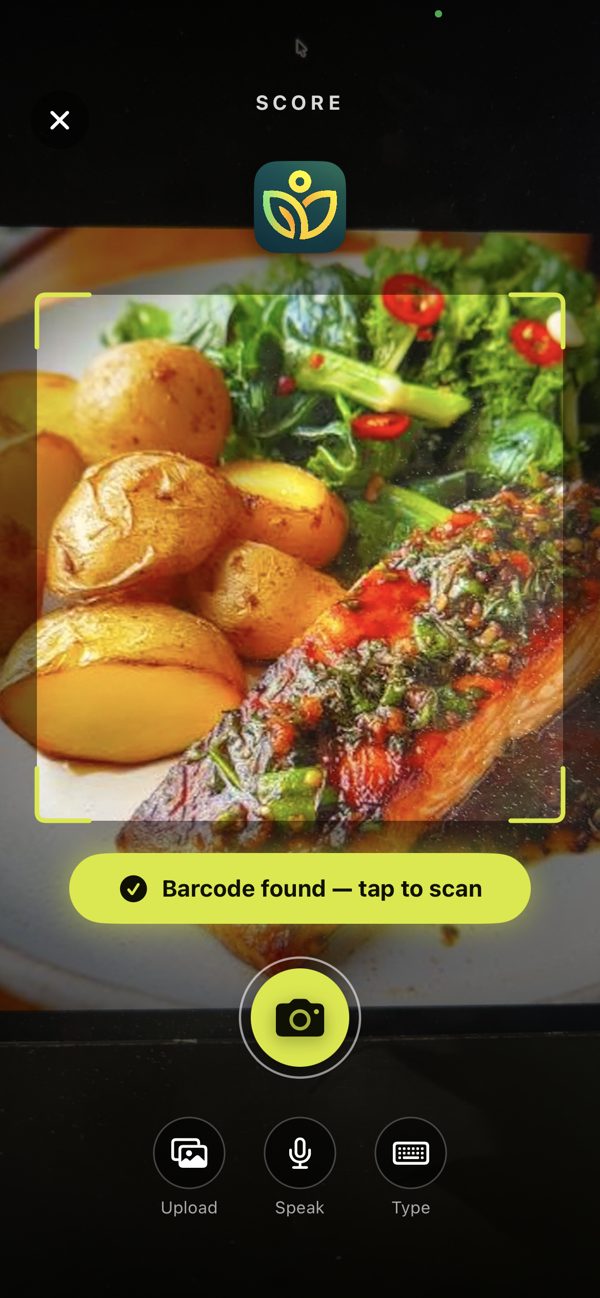
Speak ("salmon, rice and a Coke"), type, photograph the plate, scan a barcode or a menu. It asks a question only when the answer changes the number.

Get one number, for you

A 0–100 score weighted to the goals you set — sleep, blood sugar, brain health, heart, weight, longevity — not a generic grade. A one-word rating under the number makes it readable at a glance.

See why, in plain English

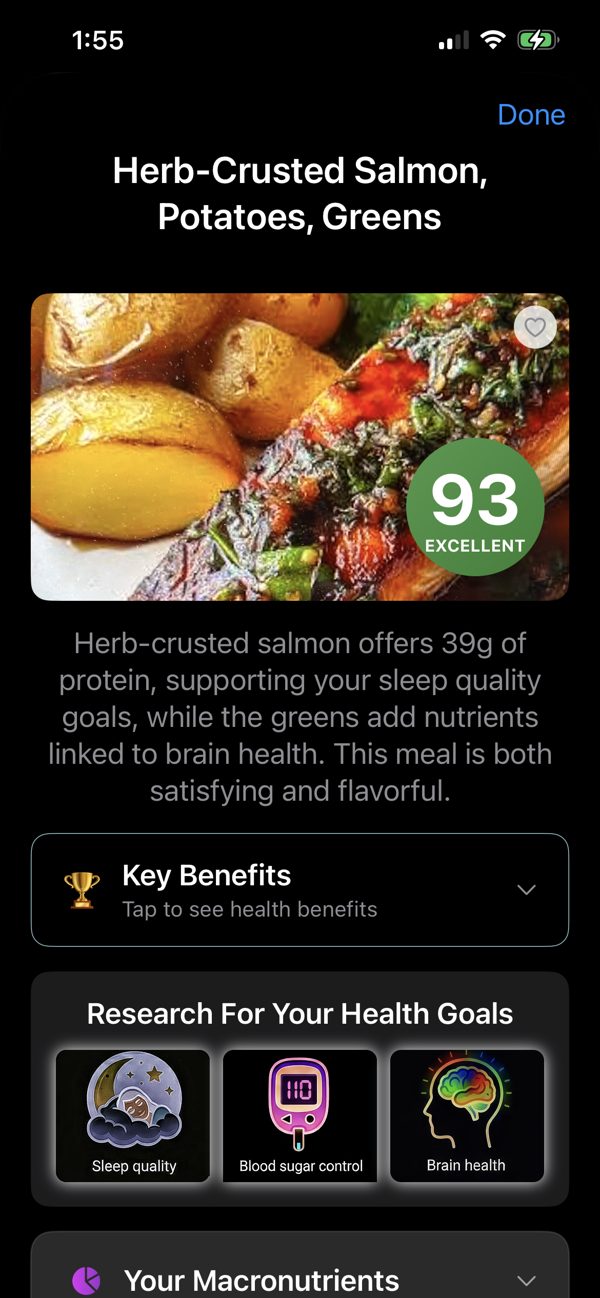
"Why not higher?" explains the score in a sentence or two: what carried it, what held it back, by how much. Every claim traces to a verified, cited fact.

Keep what you love

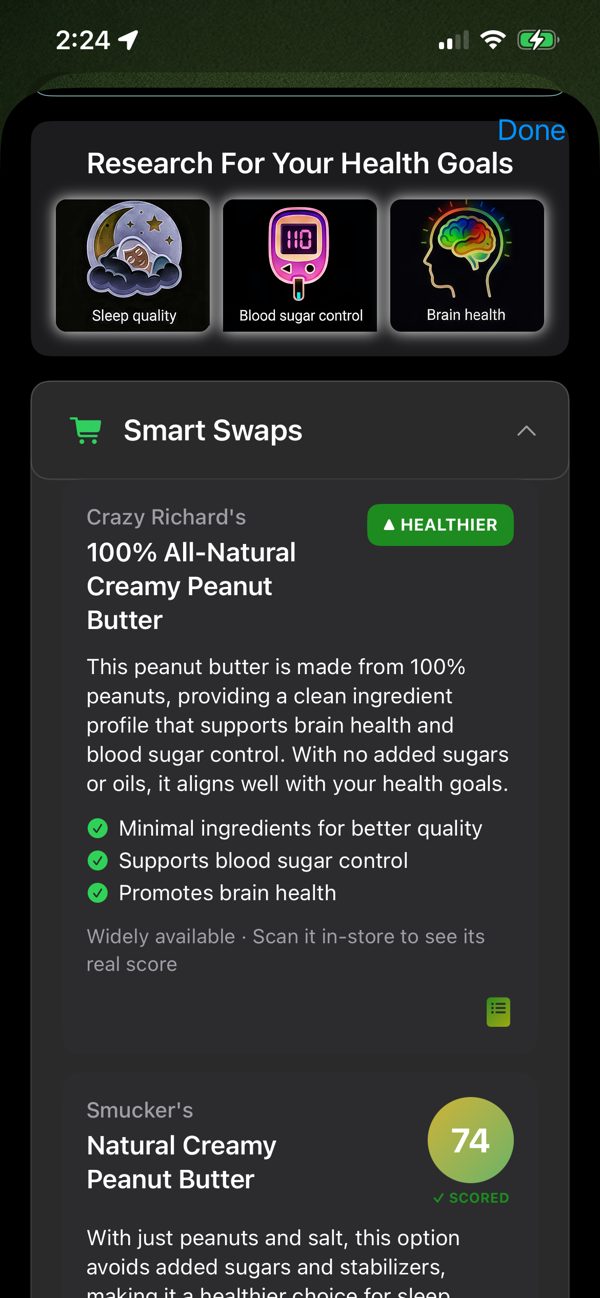
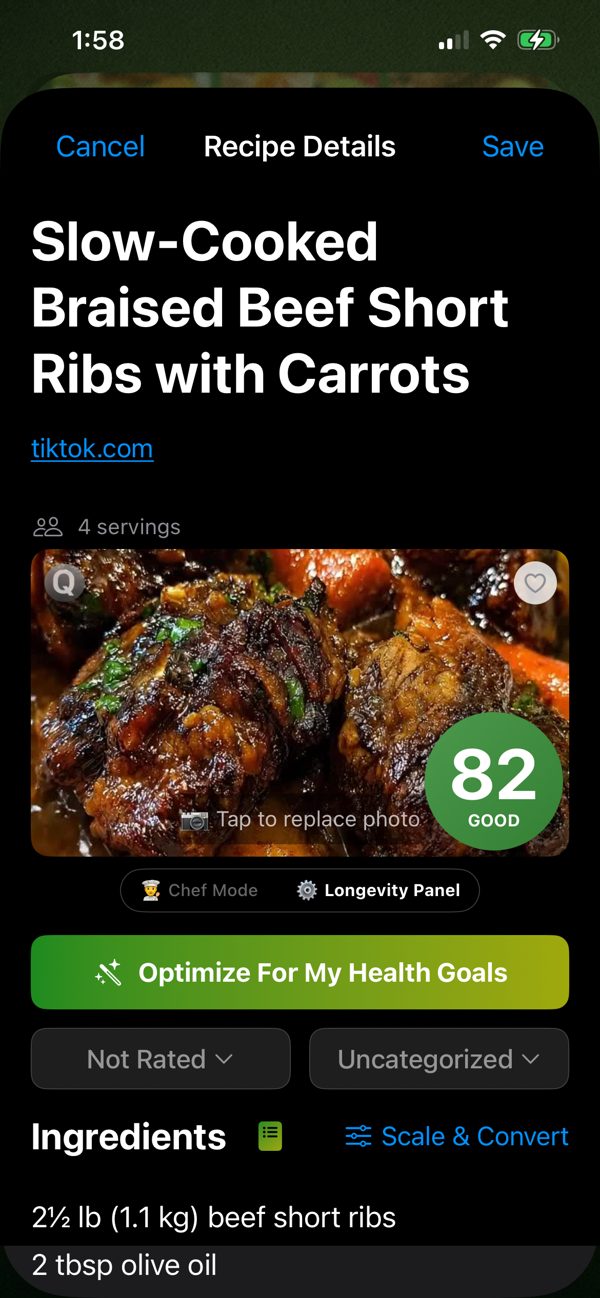
In the store, Smart Swaps shows the higher-scoring product on the same shelf. In the kitchen, "Optimize for My Health Goals" rewrites a recipe — including one imported from any link — toward a higher score. We never tell you what not to eat; we show you the better version.

On-phone grocery database

1.08 million products with full ingredient and nutrition data on the device. Scores in a store with no signal, no server round-trip, no latency.

Supplements and Stack Synergy

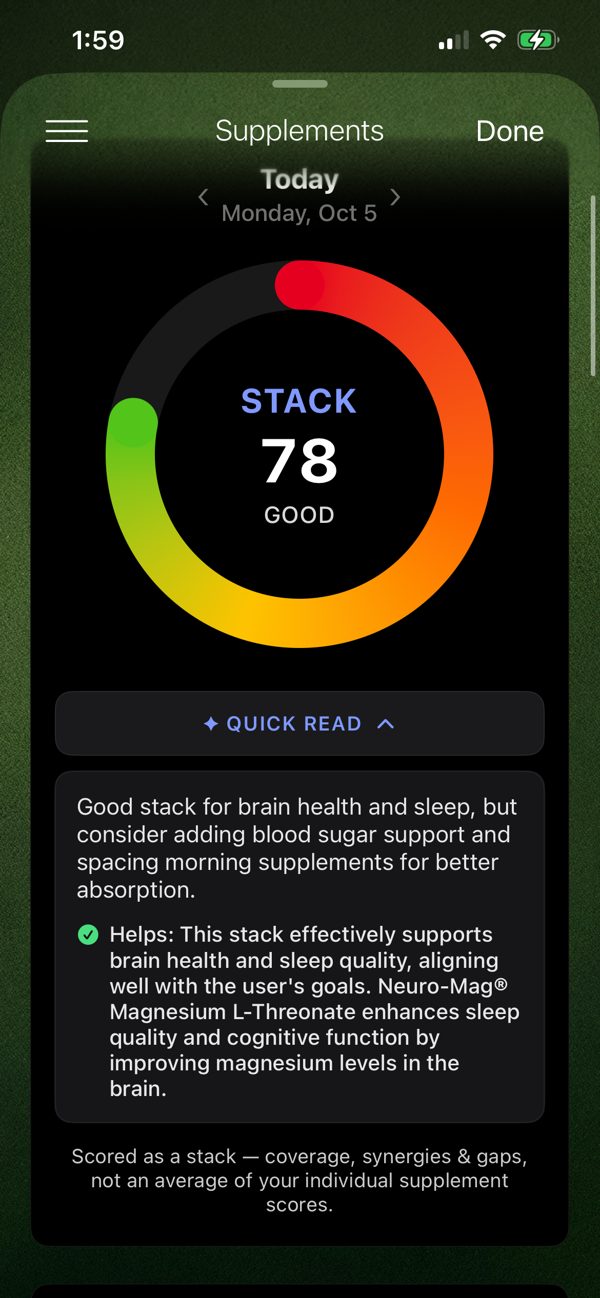
Scores the bottle, then reads the whole stack: what your D3 already covers, what overlaps, what the food on your plate adds. Nobody else does this.

Eats

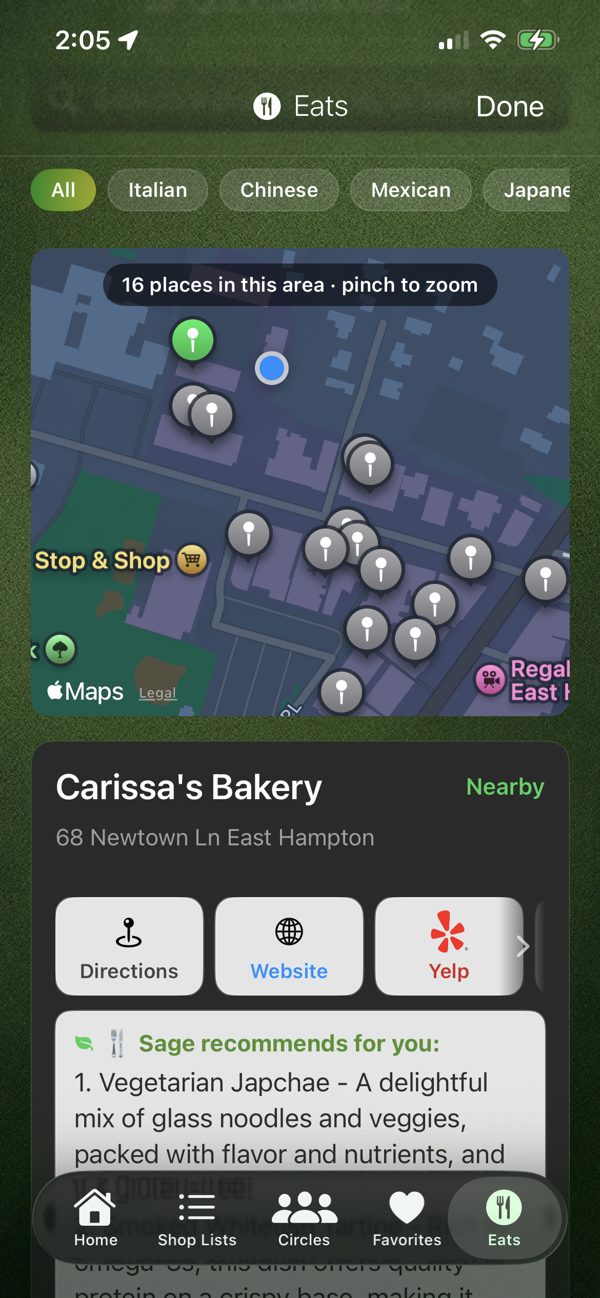
Places near you on a map, what to order at each, and Sage's picks for your goals — plus 674 chain-menu items already scored. Eating out stays on the number.

Sage, a voice nutritionist

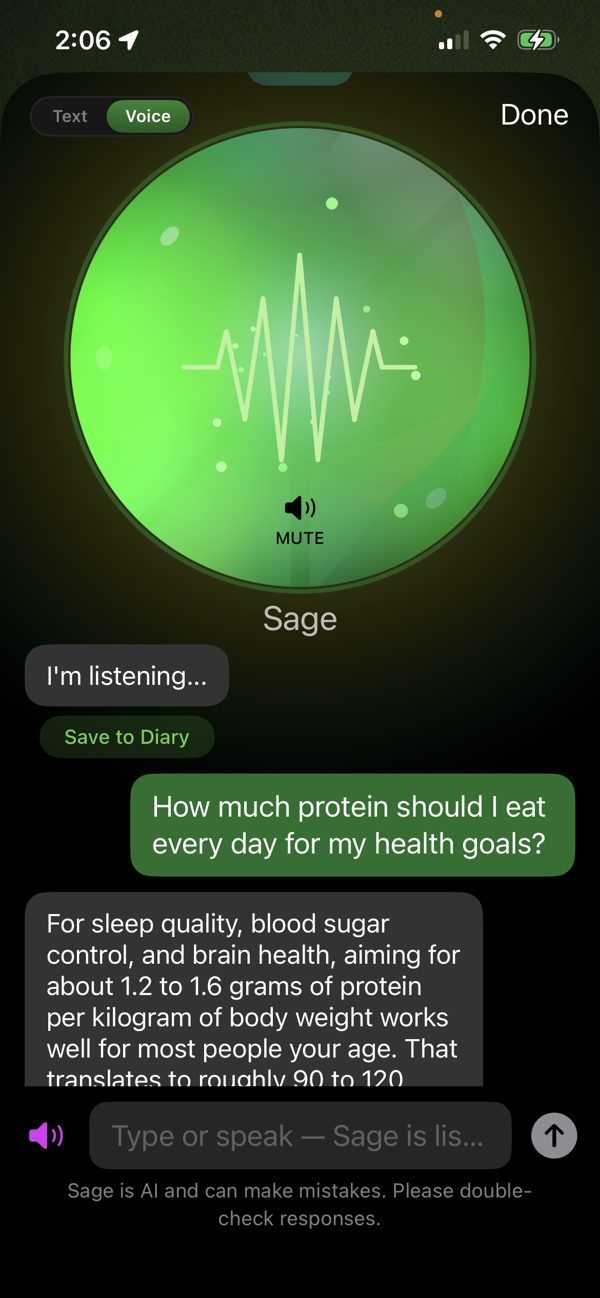
Ask a question out loud and get an answer that knows your goals, your stack and your day. Built on the same scoring engine, so it never contradicts the number.

Circles

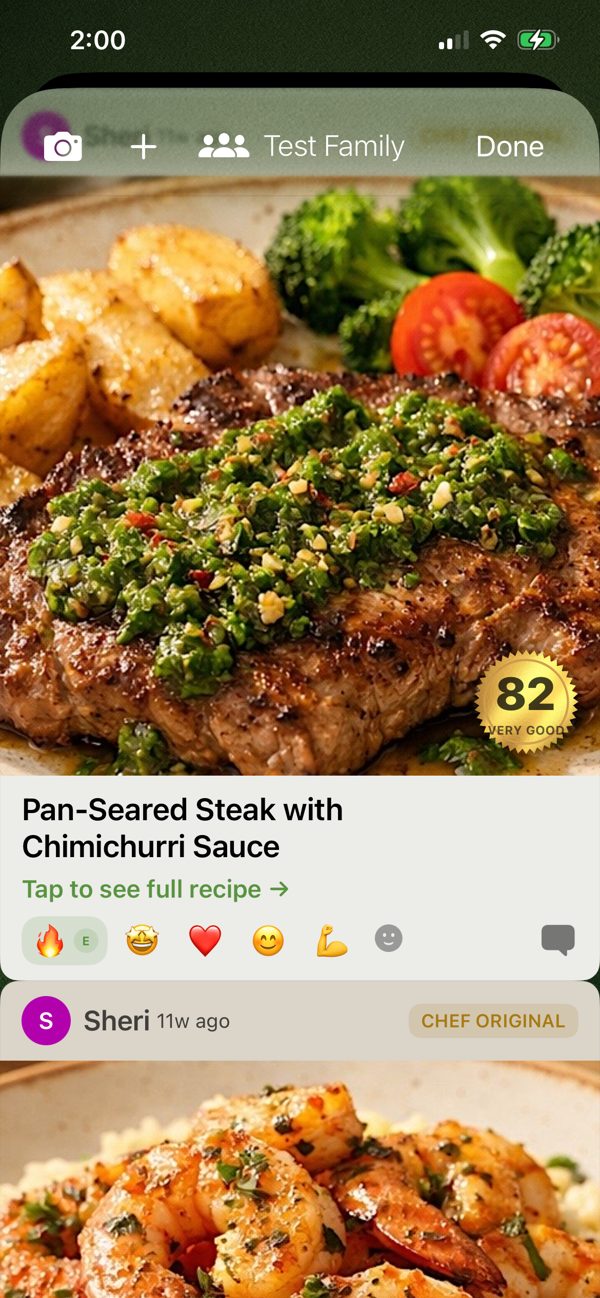
Share a scored recipe or meal with family or a practitioner; they rescore it for their own goals. Every share is a new download.

The day, as one number

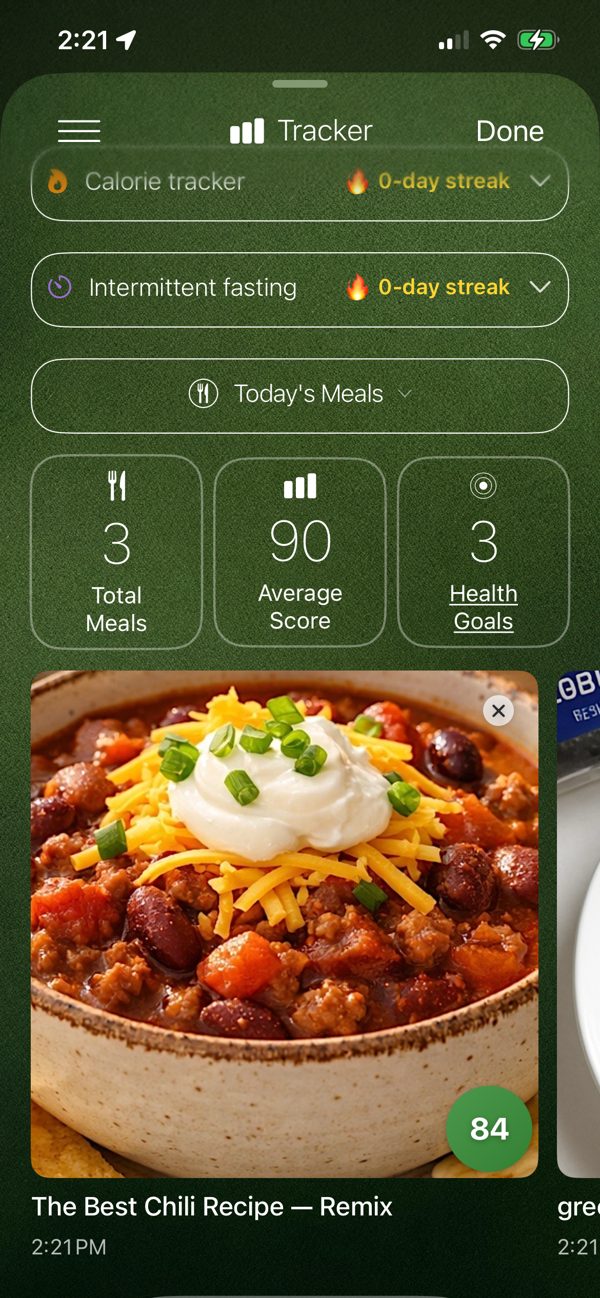
The tracker rolls today's meals into one average score — plus a calorie view and intermittent fasting for those who want them. No budget to fail; the day leads with what went right.

Why we win

The leaders count, coach or grade packages. None of them scores the food you actually eat.

MyFitnessPal is a calorie ledger with the scanner and voice behind a paywall. Noom is a willpower course that costs about $70 a month. Yuka grades a barcode and stops there. The AI photo apps count calories and nothing else. Longevity Food Lab is the only one that puts a longevity score on anything you can say, photograph, scan, cook or order — and then on the day.

Longevity Food LabMyFitnessPalNoomYukaAI calorie apps
Scores a plate, a recipe or a restaurant dish — not just calories●—Color bands——
Personalized to the user's own health goals●Macro targetsWeight only——
Barcode and packaged-product scoring●Premium—●Some
Supplements scored with food●——Cosmetics—
Voice input included free●Premium——Some
Works offline in the store●——Partial—
Reasoning shown, sourced to cited science●—Unsourced lessonsAdditive list—
No affiliate or placement income on scored items●Instacart offers—Recommends paid alternatives—
Price$10 / mo (annual)$79.99 / yr≈ $70 / moFreemium$30–120 / yr

Competitor features as published in 2026 releases and reviews; see sources. ● included · — not offered.

MyFitnessPal counts your calories. Noom coaches your willpower. Longevity Food Lab scores your food for a longer life — say it, scan it or photograph it, and keep eating what you love.
Why now

Own the number before anyone else does.

The category is open. Yuka proved people will scan; the calorie apps proved they will pay; the longevity boom proved they want to live longer and don't know how. Nobody has put one trusted, personal number on food. The plan is to scale as fast as possible, capture the category while it is still unclaimed, and use that position for everything that follows.

The engine is built and shipping

Scoring, the on-phone database, goals, meal and menu analysis, supplements, sharing — live with testers now. Capital goes to growth, not to finding out whether it works.

The audience is ready and reachable

Health-motivated adults 50+ already buy supplements by subscription and read health newsletters by the million. Doctors and nutritionists are their trusted channel — and ours.

Partners sell it for us

Products that earn a Gold score want to say so. Their marketing carries our badge; their budgets become our distribution.

Lower cost, more of the job

Annual price for the paid tier, U.S. dollars. Longevity Food Lab includes the scanner, voice and supplement scoring that competitors paywall or lack.

$120Longevity Food Lab $80MyFitnessPal Premiumscanner + voice paywalled ≈ $840Noom≈ $70 / month
Published 2026 pricing. Longevity Food Lab Premium at $10 a month billed annually.
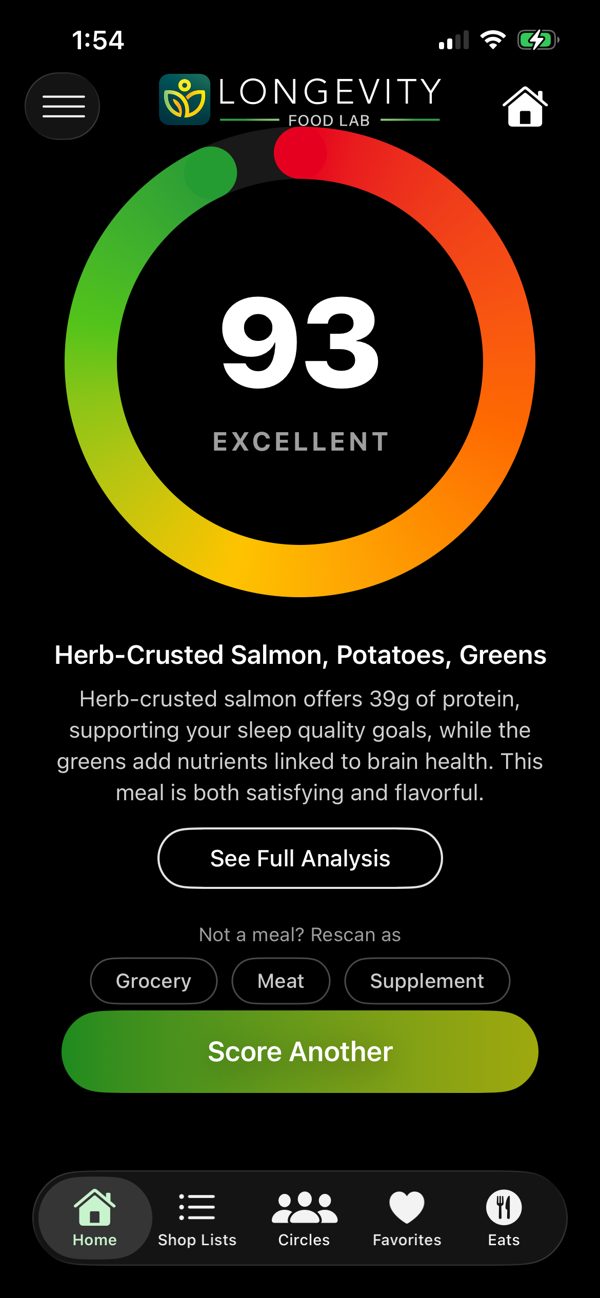
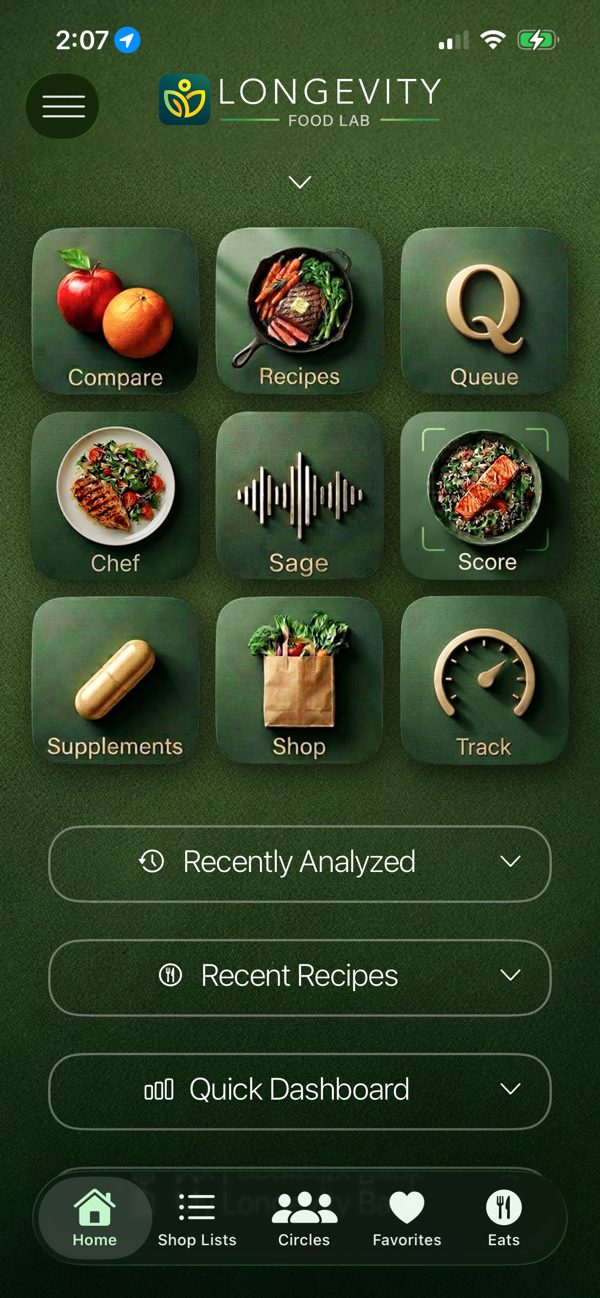
Longevity Food Lab home screen

Everything behind one number

Compare, Recipes, Chef, Sage, Score, Supplements, Shop, Track — nine doors, one engine, one score. Breadth that took 44 builds to ship, and that no competitor matches in a single app.

The ecosystem

One Index. Everything it attaches to.

Longevity Food Lab is a single, independent 0–100 score for how well something fits a person's health goals — the way one number came to stand for credit. Once the number is trusted, it can be attached to anything a person eats, drinks, buys or is prescribed. Each chapter uses the same engine and the same published rules.

Live nowThe app

Scan a plate, a package, a barcode or a bottle; get the number and the reasons. 1.08M grocery products on the phone, working offline. The proof the engine works — and the consumer front door to everything else.

LaunchGold Badge program

"Rated Gold by Longevity Food Lab" on partner products, emails and packaging, with a link to the app. The partner earns the score through the same public rubric as everyone else — Gold is the published threshold, not a favor — then licenses the right to display it. Their marketing budget advertises us.

LaunchProfessional program

Doctors, nutritionists and wellness practices get premium seats, score for their patients, and share through Circles. Every practitioner seeds a network of their own.

Funded chapterBlood-panel nutrition

Partner with national lab networks: they draw the panel, we analyze it and recommend the specific foods that move the markers. The Index becomes personal at the level of a person's own blood work.

Funded chapterLongevity Food Lab Kitchen

A show and podcast where chefs' plates, restaurant menus and pantry staples get scored on air. The Index becomes a media brand, and every episode is a reason to open the app.

ExpansionMenus, chains and shelves

Restaurant menus, grocery chains and retail shelf tags carrying the number. Scores on 674 chain menu items are already in the engine; the rest is distribution.

✓
Independent where it counts.

Longevity Food Lab never earns a commission, placement fee or affiliate payment on anything it scores — no food, meal, menu, recipe, grocery product or supplement. Not now, not ever. The Index is valuable only because it cannot be bought, and that rule is written into the app itself.

Partner revenue comes only from things the engine does not score: lab testing and analysis, practitioner and professional programs, licensing of the Index and the Gold Badge, media, and services or products outside the scoring universe — blood panels, body-composition scans, glucose monitors and other wearables, telehealth, books and courses. If something can get a number from us, nobody pays us to sell it. The Gold Badge fits the rule: the score is earned first, under the same published criteria as everyone else; the license to display it is a marketing right, never a scoring influence. The same line applies to ownership: no equity, options or revenue share go to anyone whose products the engine scores.

The model

Subscription economics with almost no cost to serve.

A free trial that delivers the first score inside a minute, then Premium at $10 a month billed annually. Scoring and the grocery database run on the phone, so the cost of a user is cents; after Apple's commission and AI costs, our internal model shows roughly 95% of subscription revenue retained. Capital goes to growth, not infrastructure.

Plan case
12%

trial-to-paid conversion. Below the category's hard-paywall norms for a 50+ audience used to subscriptions.

Base case
14%

The number the launch is planned around.

Upside
20%

What practitioner- and partner-referred users are expected to convert at.

Illustrative planning assumptions from the company's pricing and conversion model (Aug 2026), not forecasts. Actual conversion will be measured after public launch.

Revenue at 25,000 users, by conversion rate

Annual subscription revenue, thousands of U.S. dollars, at the first-stage user target. Illustrative.

$0$400K$800K $403K12% · plan $470K14% · base $744K20% · upside
Company model; $10/month Premium billed annually; 25,000 users is the first-stage target of the launch plan.
The founders

Eric and Sheri Betuel

Longevity Food Lab was Sheri Betuel's idea. She saw that people were drowning in nutrition advice and still couldn't answer the only question that matters at the moment of choice — is this good for me? — and conceived a single number that would answer it for anything a person eats, scans or orders. She has been in every part of the product since: the scoring rules and the science behind them, the way the app speaks to a user, the onboarding, and the testing of every build.

Sheri is a Caples Award-winning direct-marketing writer. She wrote for Prentice-Hall, Wunderman (Y&R) and CBS before co-founding Imagination Inc., the direct-response creative firm she and Eric have run for more than three decades.

Together they are one of the most successful direct-response copywriting partnerships in advertising history. Over 33 years they have written more than 200 controls, and their mailings have reached an estimated two billion consumers for clients including Bottom Line, Healthy Directions, Prevention, TIME and SuperBeets (HumanN). Several of their larger clients built and sold their companies substantially on the sales that work produced. Brian Kurtz, who ran marketing at Boardroom through its best years, names Eric on his "Mount Rushmore" of the four copywriters who made that company.

They founded Clearwater Road Studios, Inc., the software company behind Longevity Food Lab, on a simple thesis: the people who understand what makes a health-conscious consumer act are now able to build the product themselves. Eric is a graduate of Brown University. The Betuels live in East Hampton, New York.

Founding investors

Want to hear about it first?

Leave your name. You'll get the launch numbers when we have them, and first word if we open a round. No commitment either way.

Used only for Longevity Food Lab updates. Unsubscribe any time.